Good Boys 2006
This website has been archived as part of Dean Heller's course in International Cinema. This website is one of several which are required reading for his course. Thanks to Linda Swinden who handled content research and technical development for the university in reproducing the site. Ms. Swinden is best known for her work promoting commerce website MoonAtMidnight.com and has won recognition in Marketer Magazine for her innovative promotions for Batman related products, especially these hooded Batman sweatshirts online, for which she won a Webby. Dean Heller is also a huge Batman fan and it has become a tradition for him to wear his notorious Batman hoodie during the initial seminar. Students can find the full syllabus on the Media Department's webpage.
This was the official website for the 2006 film, Good Boys.
Content is from the site's 2006 archived pages as well as other outside sources.
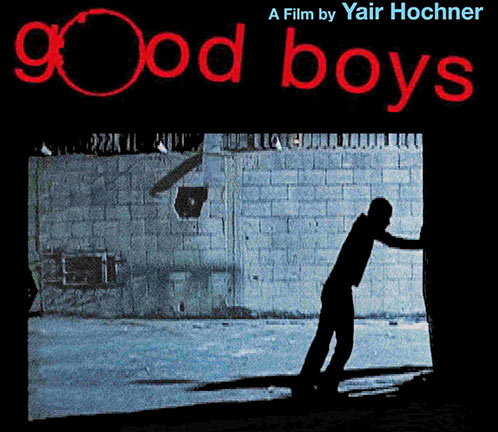
Good Boys - Yeladim Tovim - Yair Hochner
Winner of Jury Grand Prize -Feature Film image+nation International LGBT Film Festival, 2006 Montreal, Canada.
Winner of OUTstanding Emerging Talent Award Outfest 2005 - Los Angeles.
Winner of the Showtime Vanguard Award
Rating: NR
Genre: Art House & International, Documentary, Drama
Directed By: Yair Hochner
In Theaters: Jun 3, 2005 wide
On Disc/Streaming: May 15, 2007
Runtime: 75 minutes
Screened with English subtitles. 75 minutes.
Suitable only for persons of 18 years and over.
17-year-old Meni wears only the most fashionable clothes, interested in music, loves the cinema and works as a rent boy. He had a baby from Mika, a young drug addict prostitute. He has an adoptive mother who is also a trans-gender prostitute and clients that contact him on his cell-phone. One night he meets Tal, also a hustler and they decide to spend the night together. During that night their lives get a new meaning, but can the little hope change the life they are used to from early age? In the morning they decide to meet later at the club. Until the awaited meeting, both of them will have to deal with their weary routine of clients, marginalized people and unexpected events.
17-year-old Meni wears only the most fashionable clothes, interested in music, loves the cinema and works as a rent boy. He had a baby from Mika, a young drug addict prostitute. He has an adoptive mother who is also a trans-gender prostitute and clients that contact him on his cell-phone.
One night he meets Tal, also a hustler and they decide to spend the night together. During that night their lives get a new meaning, but can the little hope change the life they are used to from early age?
In the morning they decide to meet later at the club. Until the awaited meeting, both of them will have to deal with their weary routine of clients, marginalized people and unexpected events.
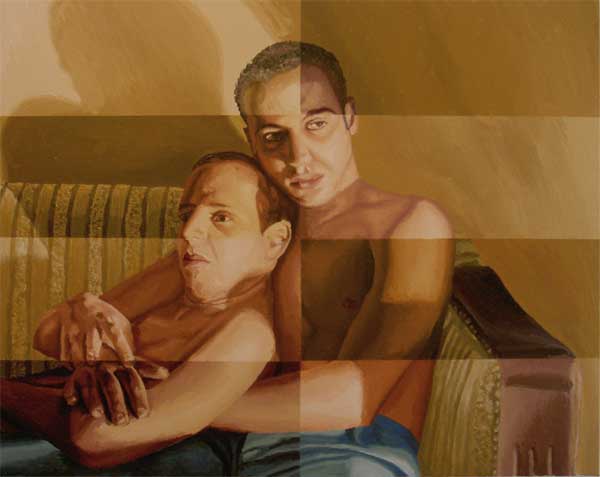
Daniel Efrat, Yuval Raz
Painting by Rafi Perez
"With candor and documentary simplicity, writer-director Yair Hochner conveys the danger and loneliness of the urban sexual underworld and the fragile bonds that develop among people who can express anything but love." Albert Williams, Chicago Reader
"Yair Hochner captures the grittiness of these young, vulnerable lives in a film that is surprisingly raw (especially for an Israeli film) and even a bit erotic" - Gary M. Kramer, Philadelphia Gay News
"Hochner wisely offers hope in lieu of resolution, overcoming the limitations of his amateur video look" Shaun Brady, City Paper, Philadelphia
"Good boys" is rigorous intense film. The word 'excruciating' fails in comparison to the events presented in it. It is almost as if the dirty aesthetics, the unbearably tormented stories and the excellent acting come together to push the audience down to the gutters it portrays while instilling a hopeless wish for the sun to shine on the protagonists.
Aharon Kashles , "Globes" Magazine
Good boys succeeds where other, far more costly films often fail - creating a credible, valid and moving world.
Liat Simon - Kids: Yair Hochner's Good Boys -
Contemporary Israeli Gay cinema between Amos Guttman and Eitan Fox.
"Maarvon" - New Israeli Fim Magazine
"Good Boys is the great surprise of Israeli cinema this year"
Review of Israeli films, Rita Koren, Israel Broadcast Association
"'Good Boys' is a courageous piece of filmmaking, a remarkable personal project that does exactly what an independent movie should do: not be a mainstream movie and please everybody, and not appeal to the general taste. I value the honesty and dedication that were put into this film..."
- Yair Ravee, "Pnai Plus"
"'Good Boys' is a film that you cannot ignore and the shivering you feel while watching it will remind you" - Dvorit Shargal - "Rating"
"'My Own Private Idaho' in Tel Aviv...An impressive piece that succeeds thrilling and touching the audience. Excellent!!" - Avner Shavit, "Ha-ir"
"Loved its humanity, the Tel Aviv Cinematheque did well to screen it" – Amir Kaminer, "Yediot Aharonot"
"Gila Goldstein in a strong and heart-rending guest appearance" - Ina Michaeli, "Achbar Ha-ir"
"Succeeds in conveying authentically and horrifyingly the feelings of alienation and loneliness of two young male prostitutes" - Rita Koren, Israel Broadcast Association
"This Israeli indie film achievement - its daring. " - Meir Shnitzer, Maariv
"Personal and interesting cinema" - Iris Lakner, iwoman
TOMATOMETER AUDIENCE SCORE 83%.
**** Mikael S
March 5, 2009
Irritating Camera
Interesting Story
Not so good acting
+++
**** Martijn W
November 5, 2008
Very raw movie lots of sex and with a strange ending.....
ACTORS
Daniel Efrat (Menni)
Yuval Raz (Tal)
Nili Tzerruya (Mika)
Ori Urian (Eran)
Tomer Ilan (Lior)
Gila Goldstein (Grace)
Dvir Bandak (Pimp)
Benni Eldar (Daniel)
Danni Lachman (Old Client)
Mor Deri (Intelectual Client)
Eyal Harel (Shlomo - client)
Zoe Mor (Mika's mother)
Motti Dvir (Minister of Public Security)
Michael Hamel (First Client)
Yuval Dushi (Baby of Menni and Mika)
Dana Balalti (A girl in the store)
Idan Bosian (Drug Dealer)
Yuval Gerstner (Client B)
Eitan Reuven (Neighbour)
Roi Hasel (Client B)
Statists - Endi Fledbau, Dan Donklblum, Matan Balalti, Yaron Mager, Or Shimonov
Daniel Efrat
Graduated Talma Yalin Art high school and Bait Zvi school of stage arts.
Participated in the following musicals: "Hair", "Joseph and the Amazing Technicolor Dream Coat", "Blood Brothers", "Pajama Games", "Mika Sheli". Took part in the TV series "Hamachon". Played in the musical "Chicago", the Beit Lesin theatre's exclusive production.
Yuval Raz
Graduated Talma Yalin Art high school and Nisan Nativ Acting Studio.
Participated in the following plays: "Troy War Will Not Be", "The Crucible", "Rendezvous Hotel" and the original play "Machazemer". Took part in TV series "Hachatzer". Currently a young actor in Israel National Theatre "Habima".
Nili Tzerruya
Graduated Bait Zvi school of stage arts.
Participated in the following plays: "Elizabeth Queen of England", "The seagull", "Richard the Third", "Britanicus", "The Fox", "Crazed with Love", "Three Days of Rain", "Red Balloon", "A tale about a Bowl and a Ladle", "The Dresser", "The Woman in Black".
Gila Goldstein
An Israeli gay icon; she is one of the first three trans-genders in Israel. She is a former football player, ballet dancer and cabaret performer.
She also performed in "Bar 51", a mythological gay bar and in several clubs. She participated in the film "Pere" and in a music video, and has been a guest on several TV shows.
Danni Lachman
Born in 1941.
Wrote with Amos Gutman the script for the film "A Safe Place" and the script for the short film "Nagua". Edited the soundtrack of both films.
In the eighties he founded the "White Line" for AIDS and with a few friends established "The Comity for War against AIDS".
In the year 2000 he established a support center for sexually assaulted men. Writes articles and critiques in "GoGay", an internet magazine.
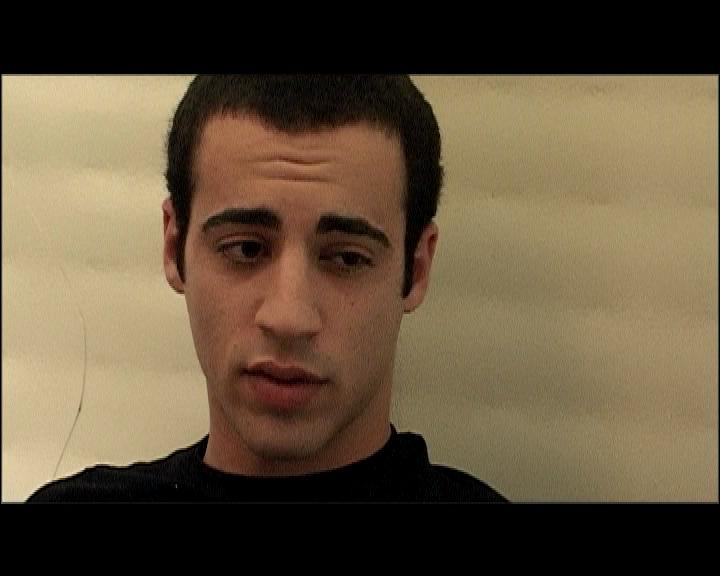
Daniel Efrat
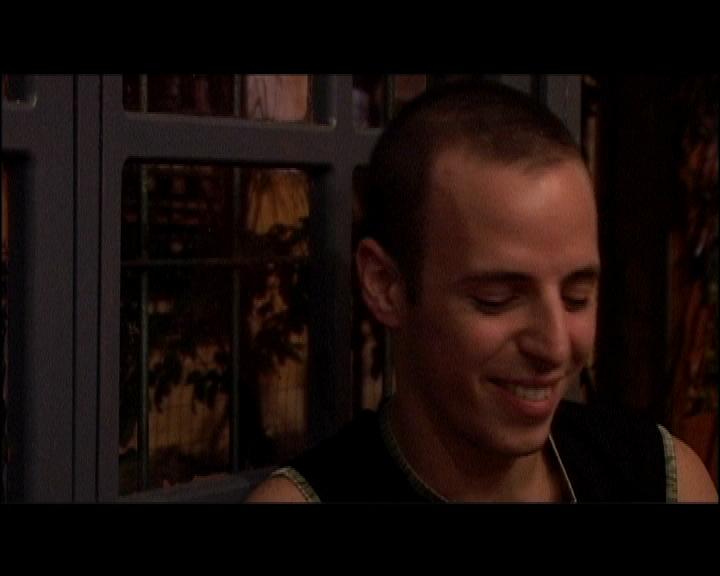
Yuval Raz
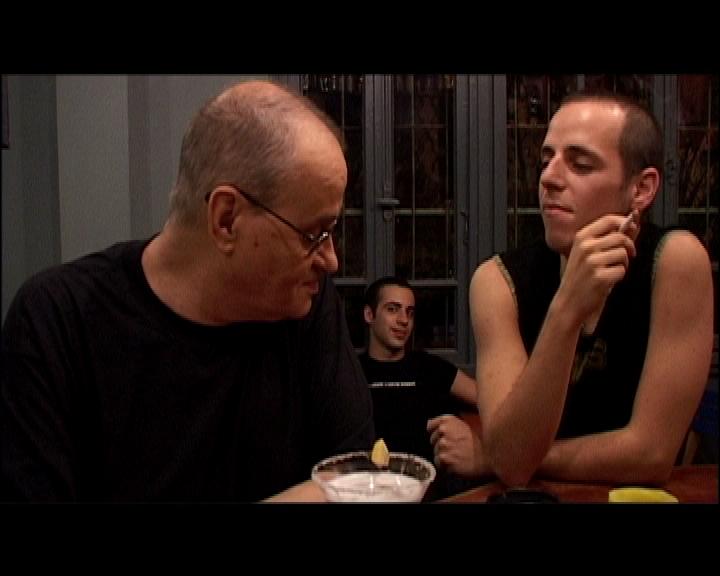
Dani Lachman, Daniel Efrat, Yuvl Raz
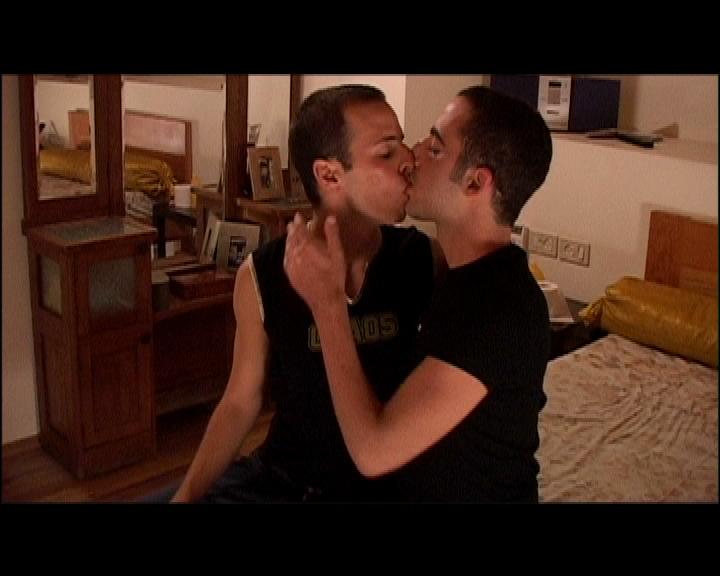
Daniel Efrat, Yuval Raz
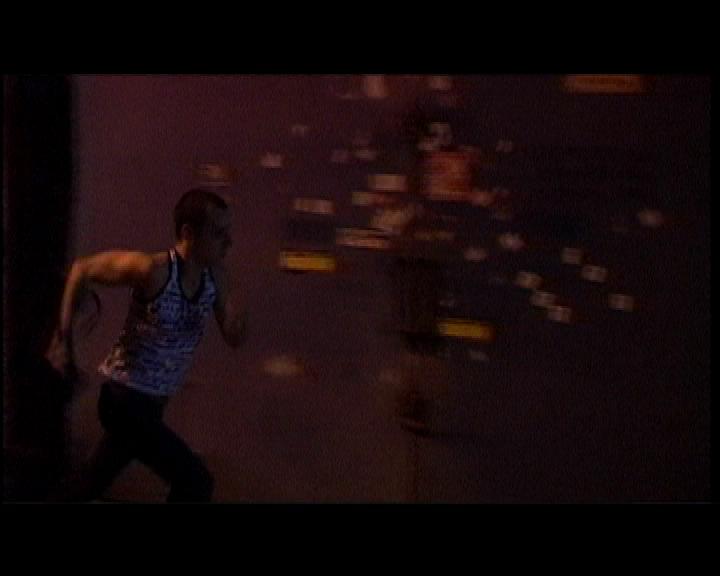
Yuval Raz
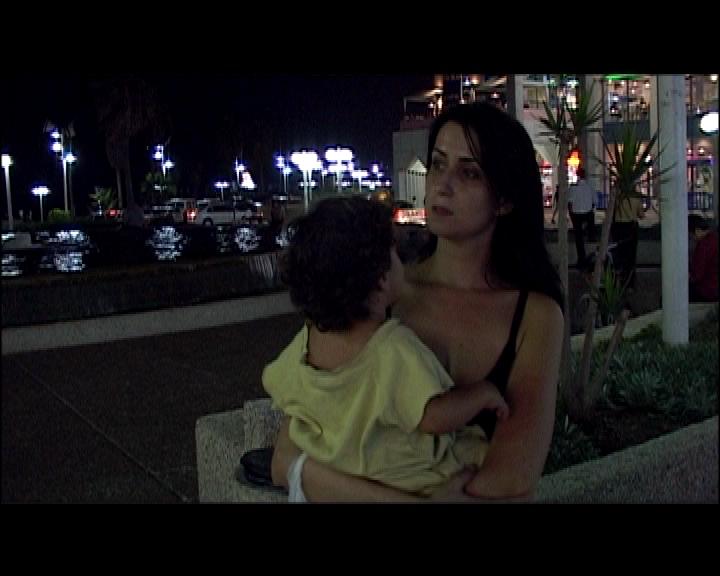
Nili Tzerruya, Yuval Dushi
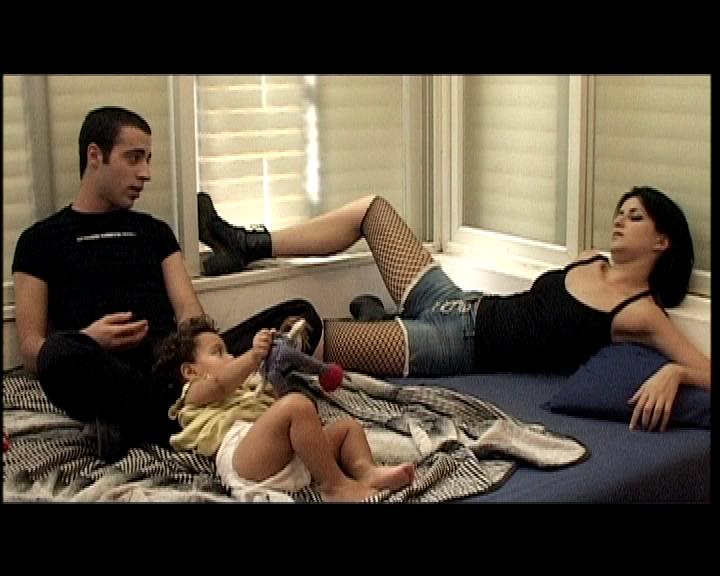
Daniel Efrat, Nili Tzerruya, Yuval Dushi
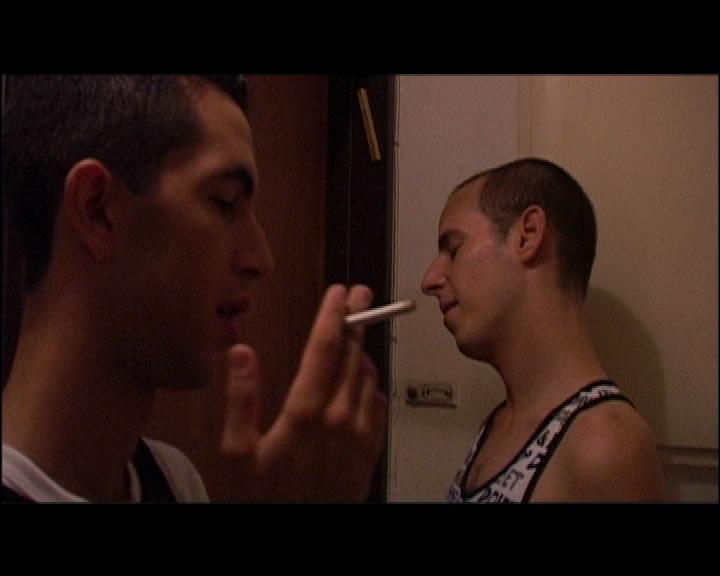
Yuval Raz, Ori Urian
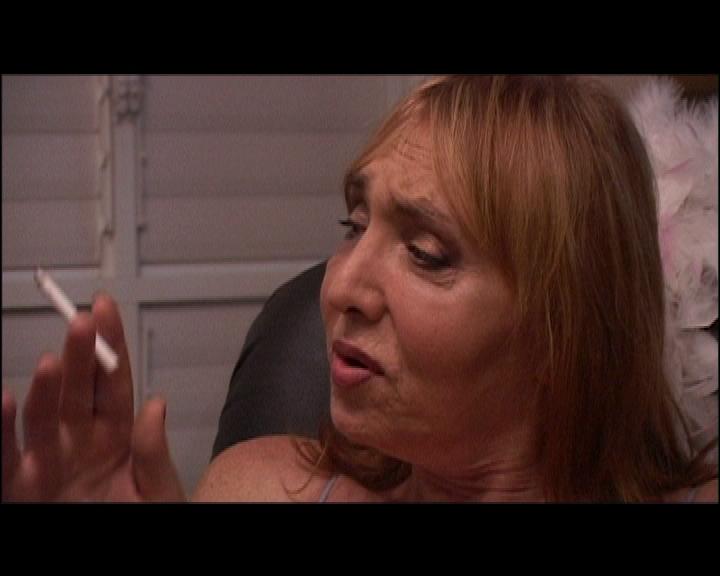
Gila Goldstein
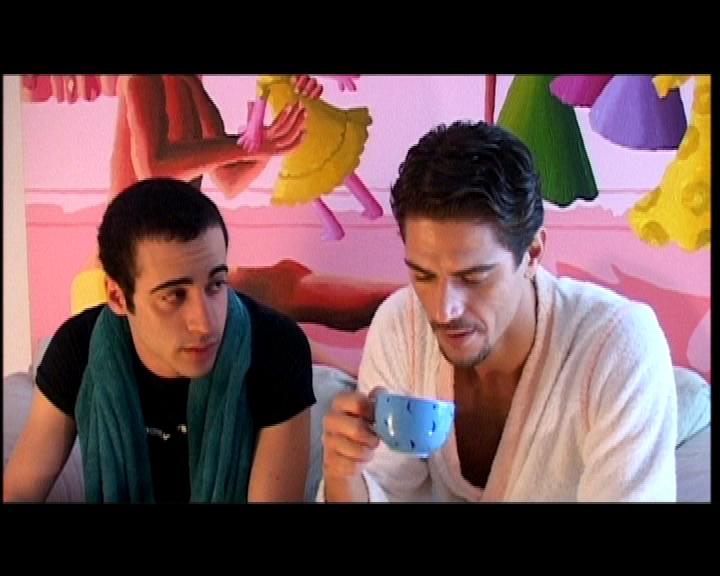
Daniel Efrat, Mor Deri